
Abdominoplasty Surgery
Abdominoplasty removes loose skin and excess fat from the abdomen and tightens the abdominal muscles for correction of contour, tone and function
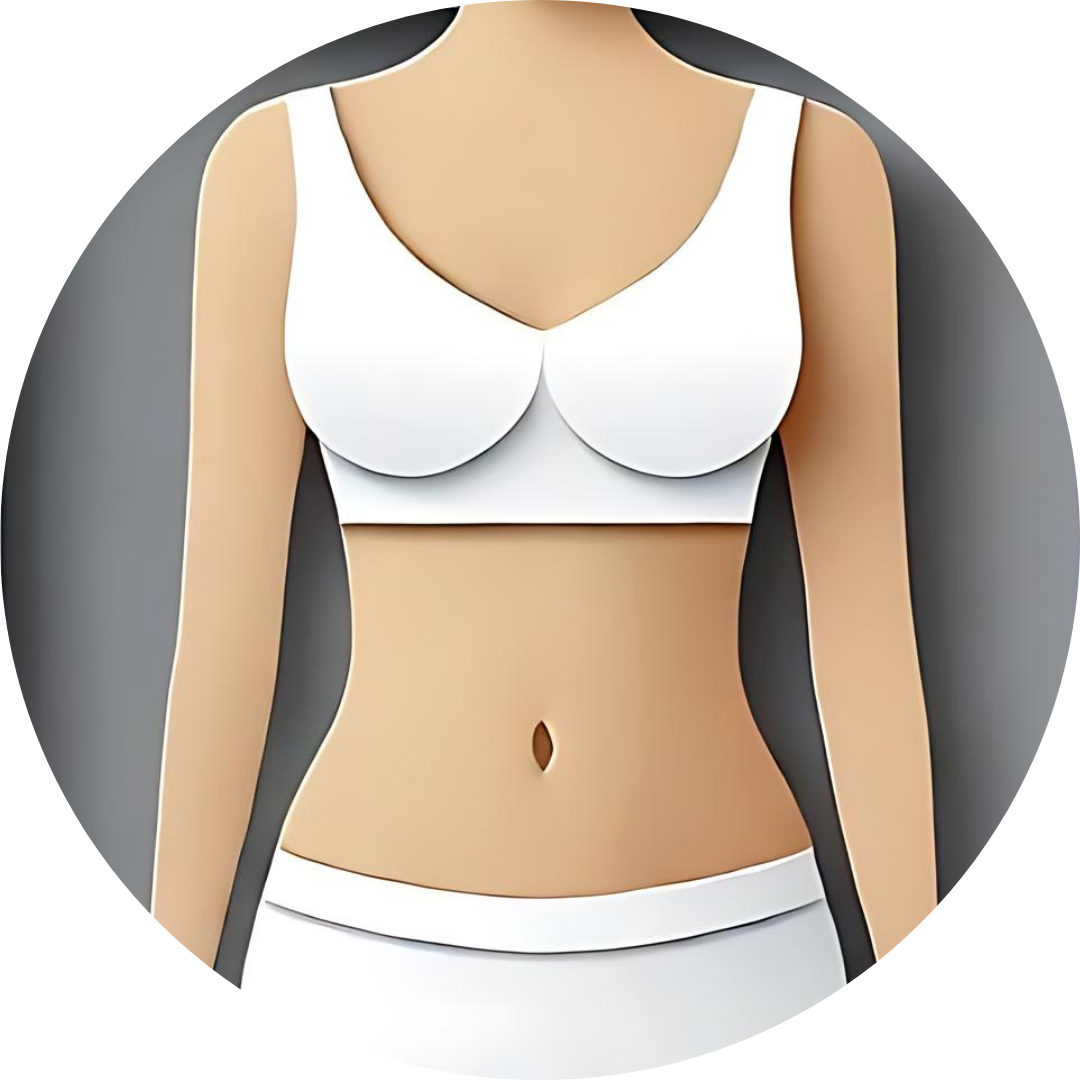

Abdominoplasty removes loose skin and excess fat from the abdomen and tightens the abdominal muscles for correction of contour, tone and function
Abdominoplasty (Tummy Tuck) is a surgical procedure performed by the Specialist Plastic Surgeons at Pure Aesthetics to remove excess abdominal skin and fat, while repairing stretched abdominal muscles where appropriate. Many people know the procedure simply as a tummy tuck. It aims to improve abdominal contour and may restore abdominal wall strength and tone following pregnancy or significant weight loss.
All surgery carries risks. Before proceeding, you should seek a second opinion from a Specialist Plastic Surgeon.

Dr Steve Merten, MBBS, FRACS:
Education and Training:
Depending on the individual and the reason for surgery, abdominoplasty may offer both functional and aesthetic benefits. Published clinical research has reported that some appropriately selected patients may experience improvements in abdominal wall strength, back discomfort or bladder control.
Beyond these potential benefits, abdominoplasty may be suitable for those who:
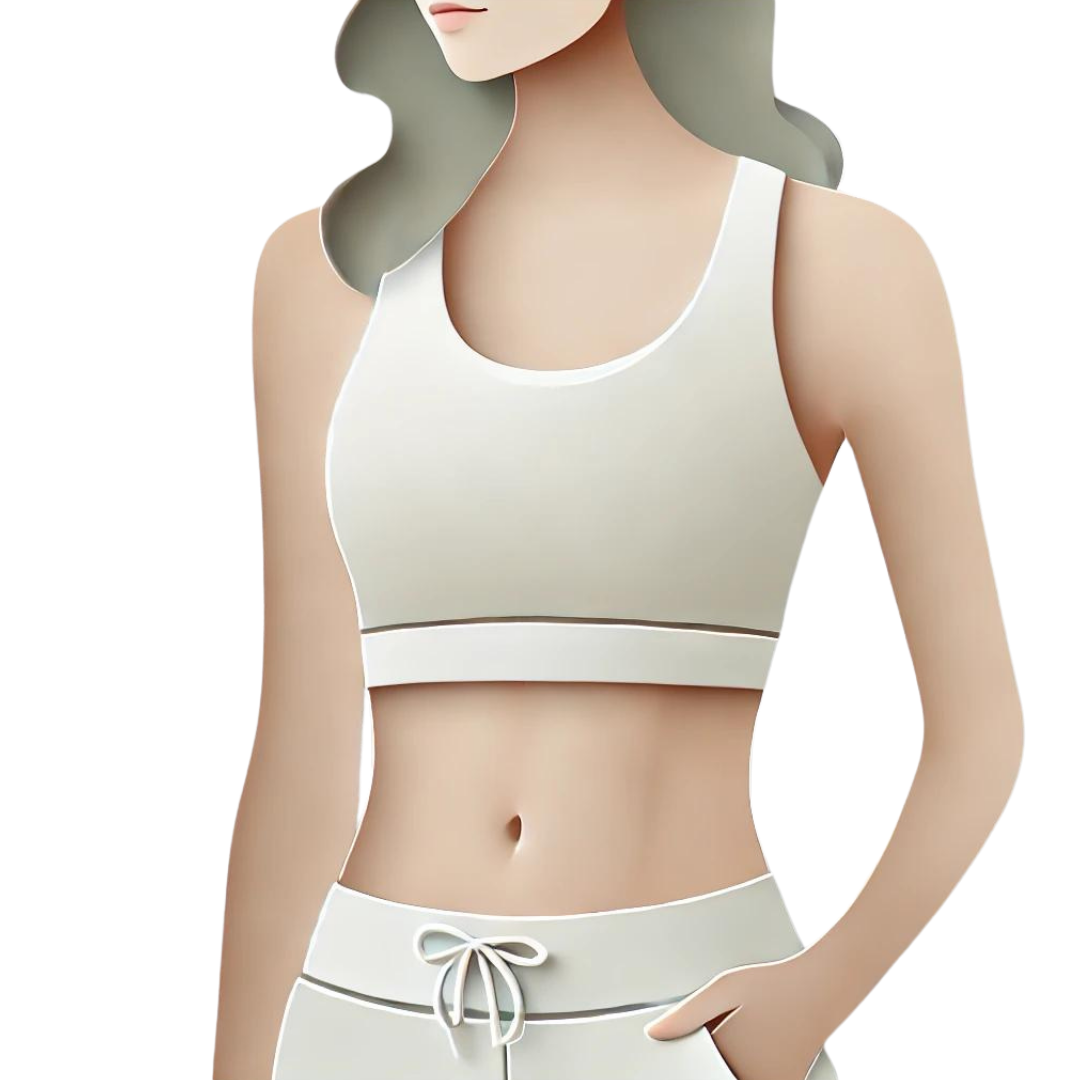
Diastasis recti is the medical term for a separation of the two large abdominal muscles (the rectus abdominis), which normally sit close together down the front of the stomach and are joined by a band of connective tissue called the linea alba. This separation is what causes the “gap” referred to above.
It commonly develops during pregnancy, as the growing uterus stretches and thins this connective tissue, and can also occur after significant weight gain or repeated abdominal strain. In many cases the gap narrows naturally in the months afterwards, which is why conservative options such as physiotherapy are usually tried before surgery is considered.
Diastasis recti is different from a hernia. A hernia occurs when tissue pushes through an actual defect or hole in the abdominal wall, whereas diastasis recti is a widening and thinning of the connective tissue between the muscles, without a true hole. The two conditions can occur together, and both can be assessed at your consultation.
Surgery is generally only considered when the separation is significant, causes ongoing functional symptoms, and has not improved with physiotherapy, consistent with the Medicare eligibility criteria described in the cost section below.
Our plastic surgeons perform three broad categories of abdominoplasty, chosen according to the degree of muscle weakness, skin stretch and overall contour presentation. Across all of these techniques, our surgeons do not routinely use drains, one of the most common concerns patients raise before surgery.
Standard abdominoplasty is the most common form of the procedure, and the typical choice when larger amounts of skin, fat and muscle require correction, as is common after multiple pregnancies or significant weight loss. The scar is positioned below the bikini line and, although long, allows for the maximum improvement in abdominal shape and strength.
The belly button (umbilicus) is freed from the surrounding skin, which is then pulled down to allow maximal removal of excess tissue, and the abdominal muscles are tightened along their full length, from the pubic bone to the breastbone. The belly button is brought out through a new opening at the end of the procedure.
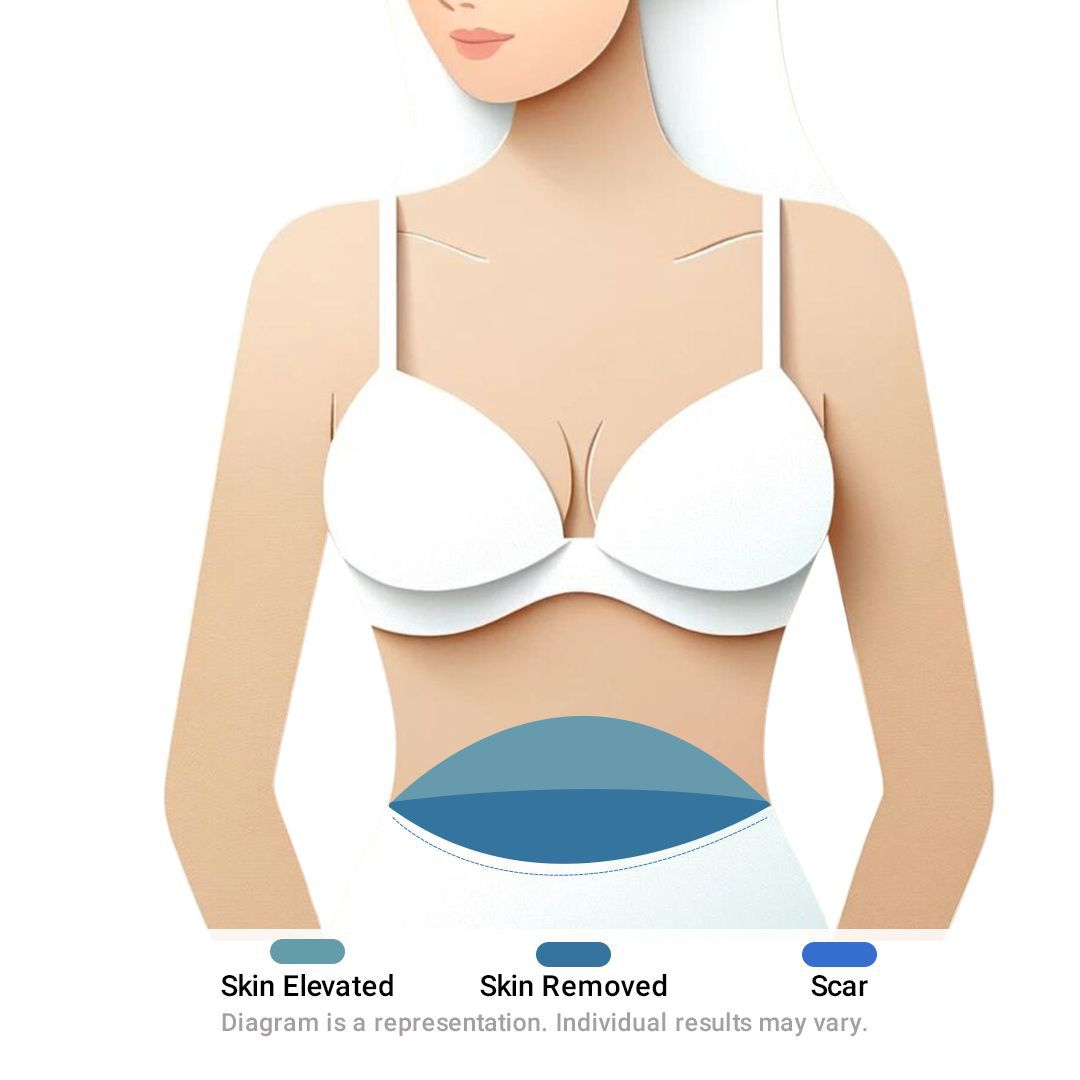
Mini-abdominoplasty suits patients with a smaller amount of skin looseness, mostly restricted to the lower abdomen below the belly button, and less need for major muscle tightening.
The scar is kept short, positioned above the pubic area only, and some additional liposuction is often performed to contour the surrounding shape. Unlike a full abdominoplasty, the belly button itself is not moved, so there is no scar around it. Recovery is usually quicker, though a mini-abdominoplasty is less effective for comprehensive improvement of the full abdomen.
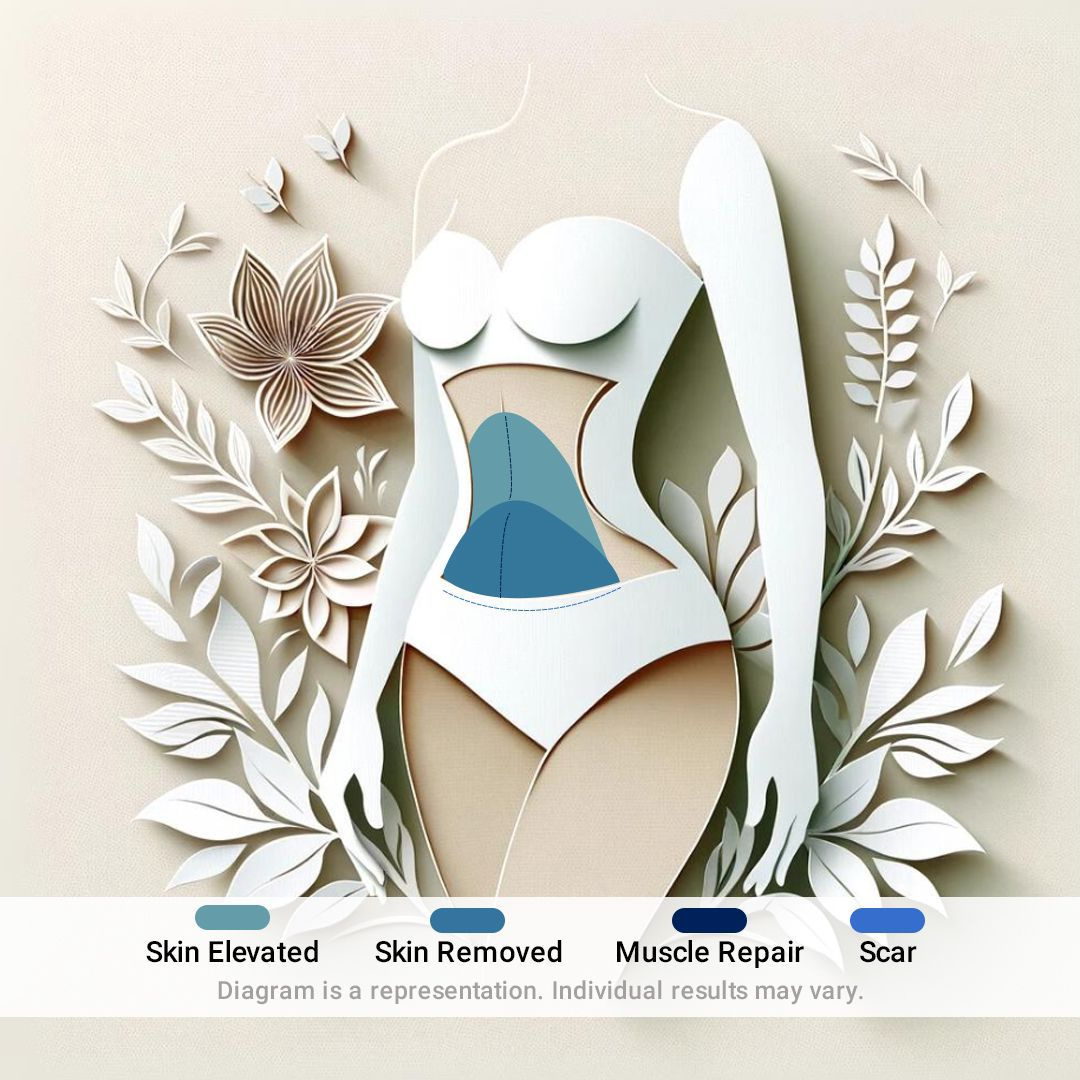
For more extensive skin excess, these techniques remove skin from multiple areas: circumferentially around the lower body, below the breasts, or vertically down the middle of the abdomen. They are more commonly recommended after major weight loss than after pregnancy, and may be combined in a single surgery or performed as separate procedures.
If your skin excess extends circumferentially around the body rather than being limited to the abdomen, this may be more fully addressed by a Body Lift (Belt Lipectomy), which Pure Aesthetics offers as a related but distinct procedure.
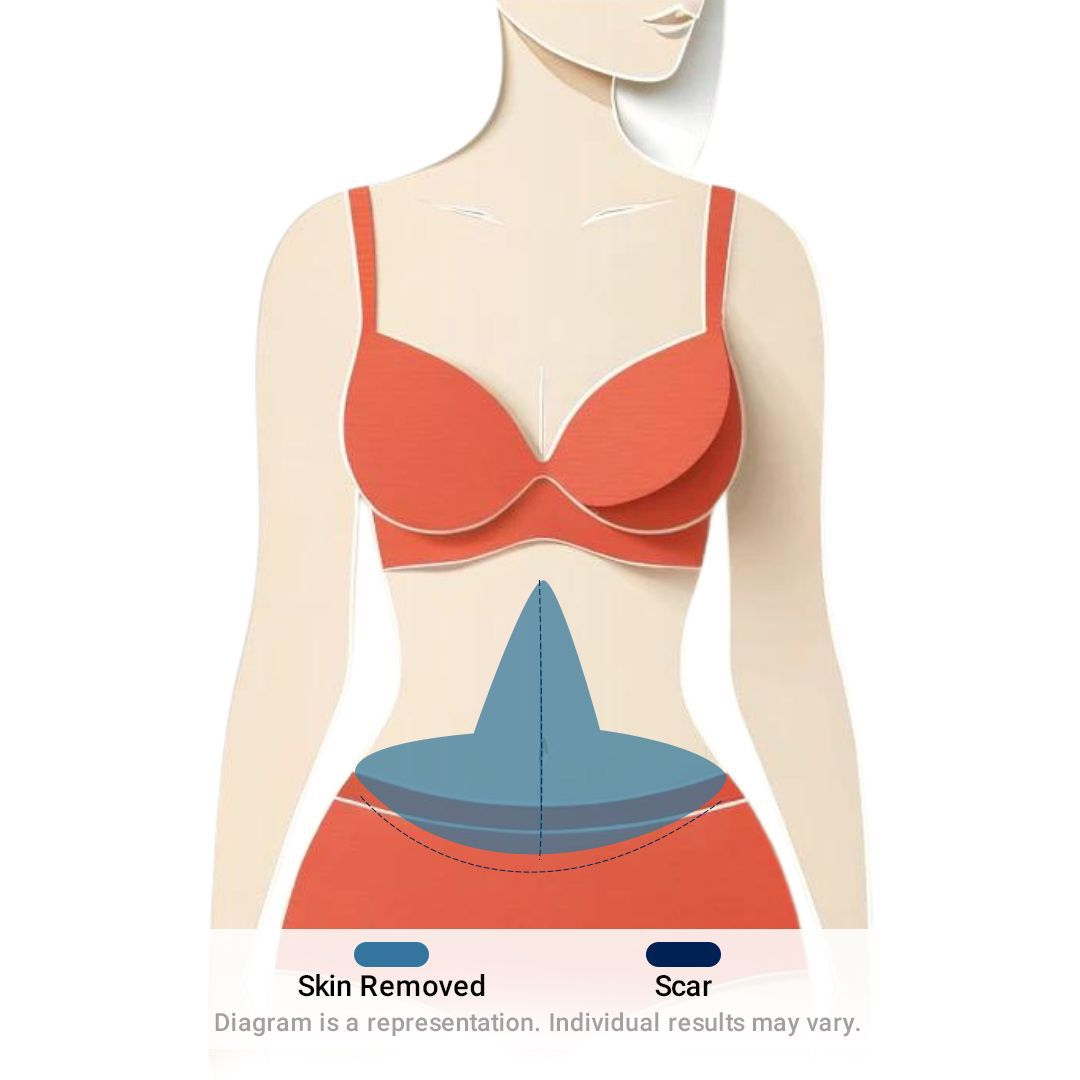
| Feature | Standard (Full) | Mini | 360°/Circumferential/Corset/Fleur-de-Lis/Reverse |
|---|---|---|---|
| Best suited for | Larger amounts of excess skin, fat and muscle laxity | Smaller amount of skin looseness, mostly below the belly button | Extensive skin excess, usually after major weight loss |
| Muscle repair | Full length, pubic bone to breastbone | Minimal | Varies by technique |
| Belly button | Repositioned | Not moved | Varies by technique |
| Scar | Hip to hip, below the bikini line | Short, above the pubic area only | Extensive, may be circumferential or vertical |
Drains are not routinely used by our plastic surgeons for any of these techniques.
Abdominoplasty and liposuction address different problems. Liposuction targets excess fat deposits, while abdominoplasty also removes loose skin and repairs separated abdominal muscles. Loose skin is not corrected by liposuction alone and can, in some cases, appear more pronounced afterwards, since the underlying muscles are not modified and the skin may not retract well. Liposuction may still be performed as part of an abdominoplasty, but the two procedures have distinctly different purposes and goals.
Your first consultation covers your medical history, your physical goals, and a thorough physical examination. Your surgeon will review current medications, allergies and past medical treatments, while assessing the muscles, fat and skin of your abdomen in the context of your overall body proportions.
Photographs of your trunk and abdomen are taken to assist with surgical planning and to track your progress, and are kept strictly confidential between your plastic surgeon and our staff. You will also discuss the recovery process and potential complications, and are encouraged to ask questions at any point.
Your second consultation goes further into your specific surgical options and reiterates the risks and complications relevant to your individual case.
If you would like to understand more about what to look for in a surgeon before your consultation, Pure Aesthetics provides a guide on why choosing a plastic surgeon matters and a cosmetic surgery checklist to help you prepare.
Yes. Abdominoplasty is commonly combined with liposuction, or with breast procedures, as part of a single surgery where clinically appropriate.
Many patients consider a comprehensive post pregnancy reconstruction, combining abdominoplasty with procedures such as breast enlargement, breast lift or breast reduction. Some people use other informal terms for this combination of procedures, but at Pure Aesthetics we describe it as a post pregnancy reconstruction. Combining procedures in a single surgery can mean fewer separate recovery periods than staging separate operations, provided the combination is safe for the patient.
For patients whose primary concern follows major weight loss rather than pregnancy, abdominoplasty may be planned alongside Body Contouring Surgery After Weight Loss.
For female patients, it is generally recommended to wait until you have finished having children, so your abdominal muscles are not subjected to further stretching by a future pregnancy. Following major weight loss, abdominoplasty is advised once your weight has stabilised close to your goal weight and your overall nutrition is stable.
Abdominoplasty is not intended as a weight loss procedure and should only be considered with realistic expectations of the results that can be achieved.
Abdominoplasty is performed under general anaesthetic in fully accredited hospitals, with the incision positioned below the bikini line to keep the resulting scar as inconspicuous as possible. After the incision is made, the skin and fat are lifted off the abdominal muscles, the separated and stretched muscles are tightened and the “gap” between them repaired, and the loose skin is pulled down to remove the excess. The belly button is then repositioned, and wounds are closed with dissolving stitches beneath the skin, without a drain in most cases.
Compression garments are required for at least 4 weeks after surgery to assist with swelling and support healing.
Our plastic surgeons do not routinely use drains for abdominoplasty, to improve your comfort and recovery.
Most swelling subsides by around 6 weeks, giving a good indication of the final result, though results continue to settle up to the 3-month mark. As healing progresses, the abdomen typically becomes firmer with improved contour. To maintain long-lasting results, our plastic surgeons recommend a stable weight, regular exercise and a healthy diet.
Abdominoplasty should not affect your ability to have children in future, and it should not affect your health or safety if you do become pregnant afterwards. It is typically advised to wait until you have completed your family before undergoing the procedure, as a subsequent pregnancy can stretch the skin and cause the repaired abdominal muscles to separate again, reversing the contouring effects of the surgery.
As with any surgical procedure, there are potential risks and complications.
General surgical risks include:
Risks and complications specific to abdominoplasty include:
Abdominoplasty scars are permanent, though they are carefully positioned below the bikini line. The incision for a full abdominoplasty generally runs hip to hip, just above the pubic area, usually with a scar around or within the belly button. Patients who do not require correction to the upper abdomen may have a shorter scar, similar to an extended caesarean scar. Scars are often red and somewhat thickened at first, generally fading to a fine, pale line over about a year.
If there is extreme excess skin, an additional incision running top to bottom as well as side to side may be required, or a full circumferential scar for patients after extreme weight loss.
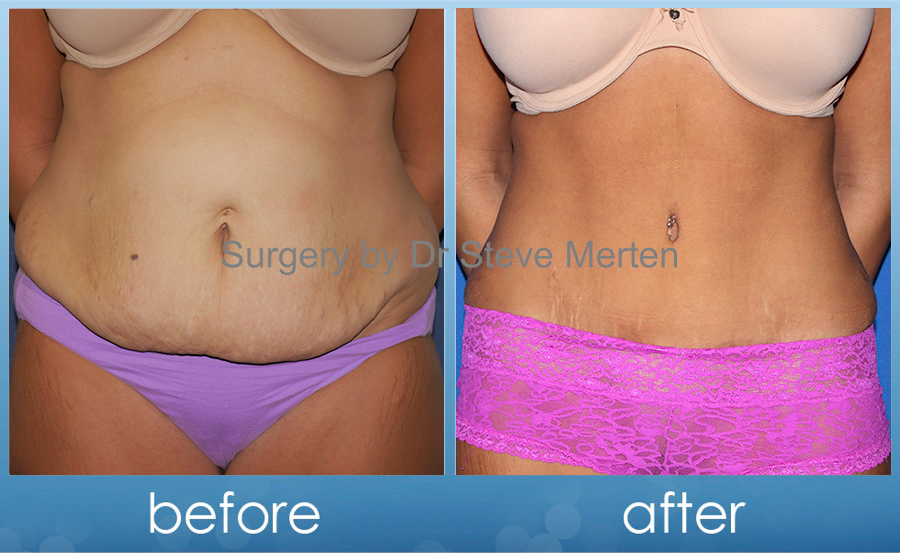
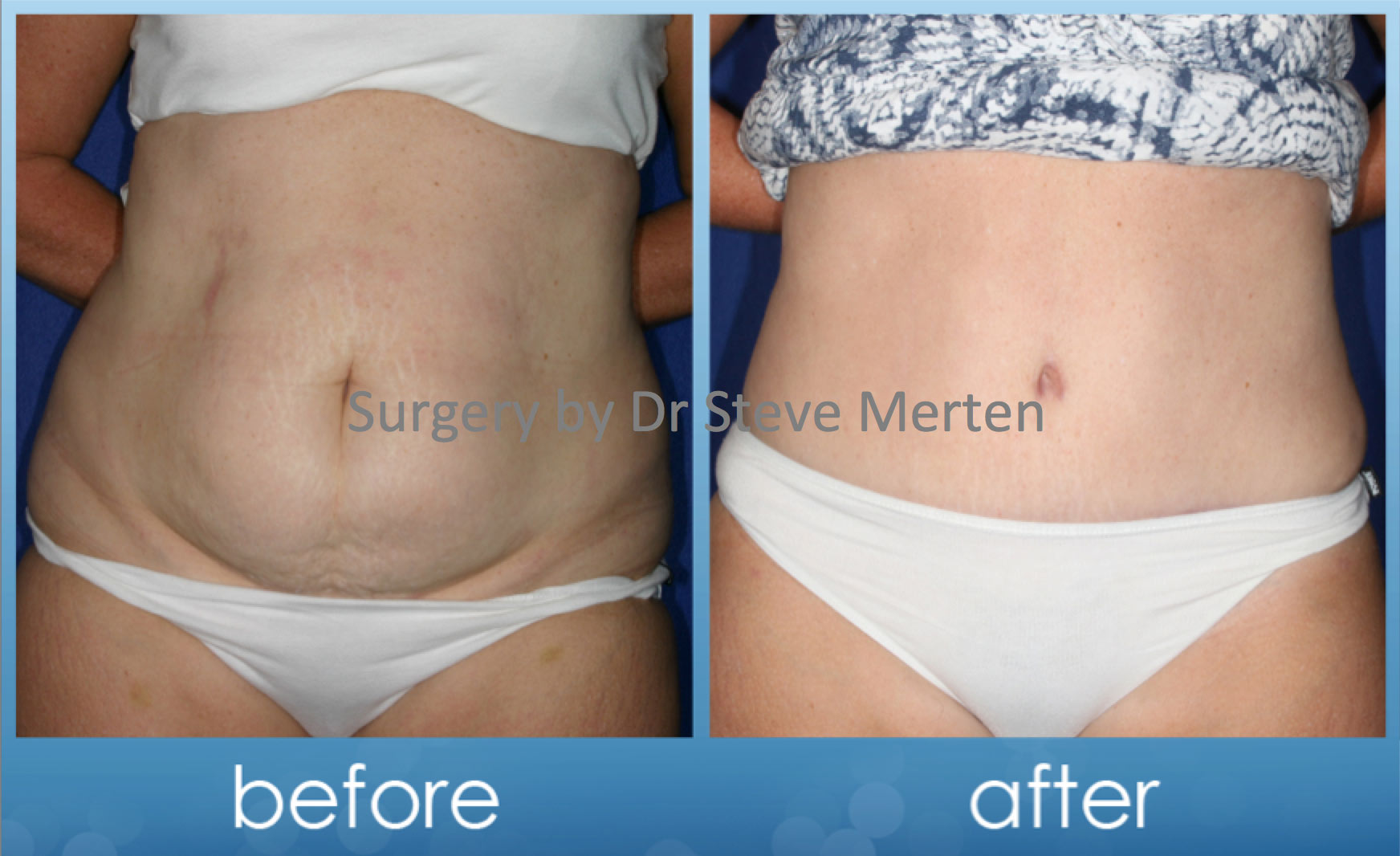
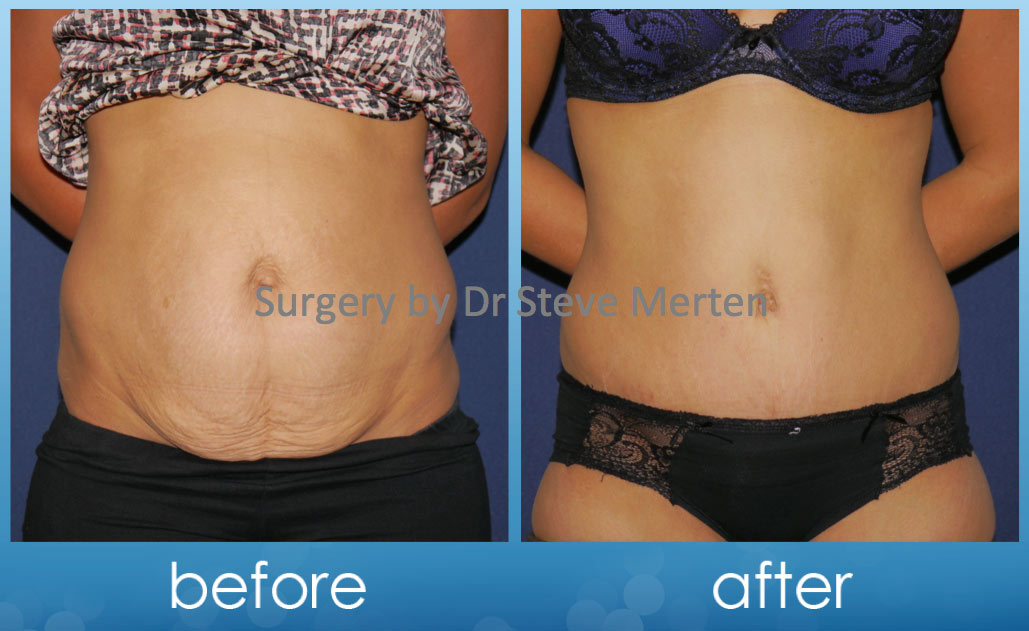
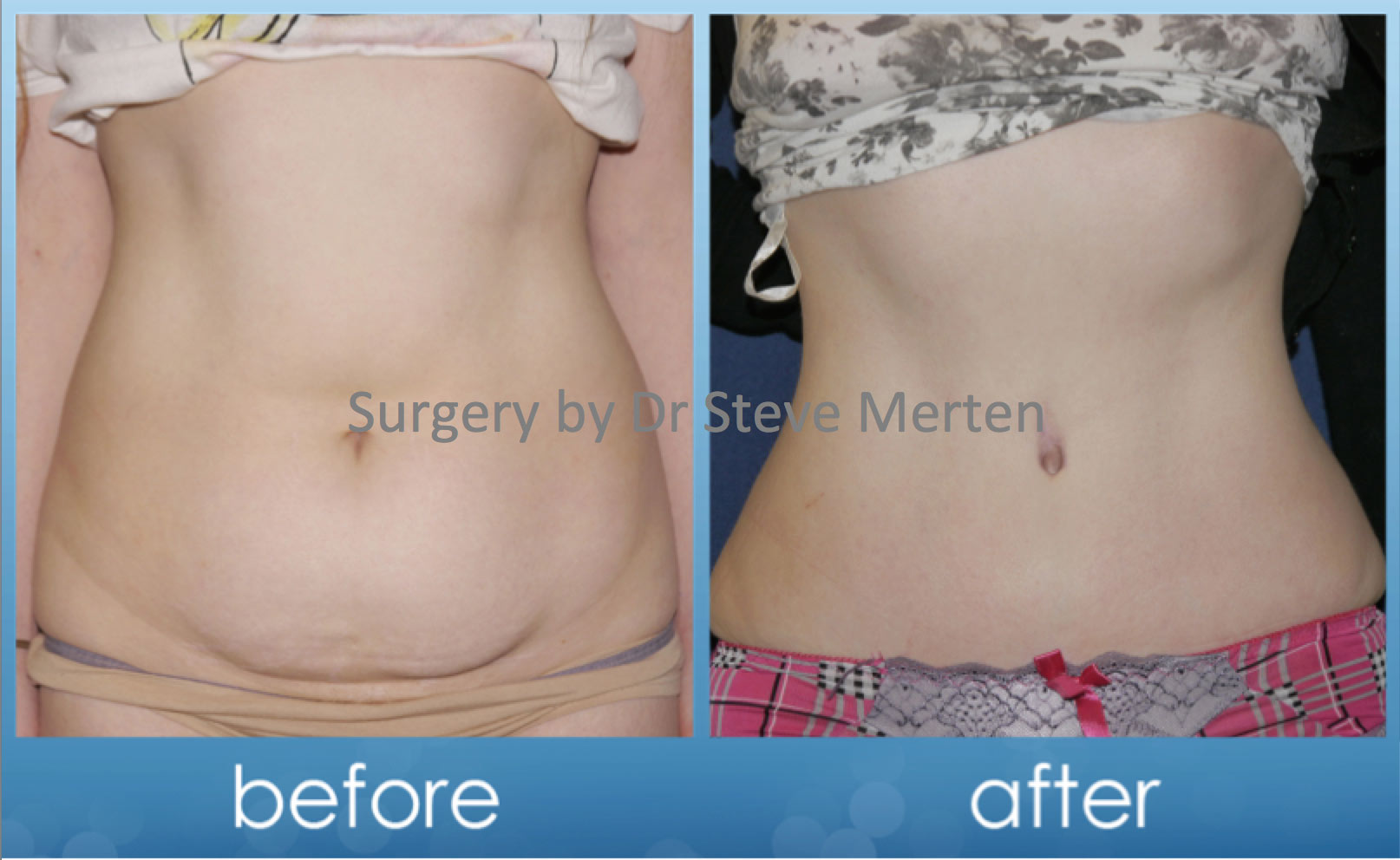
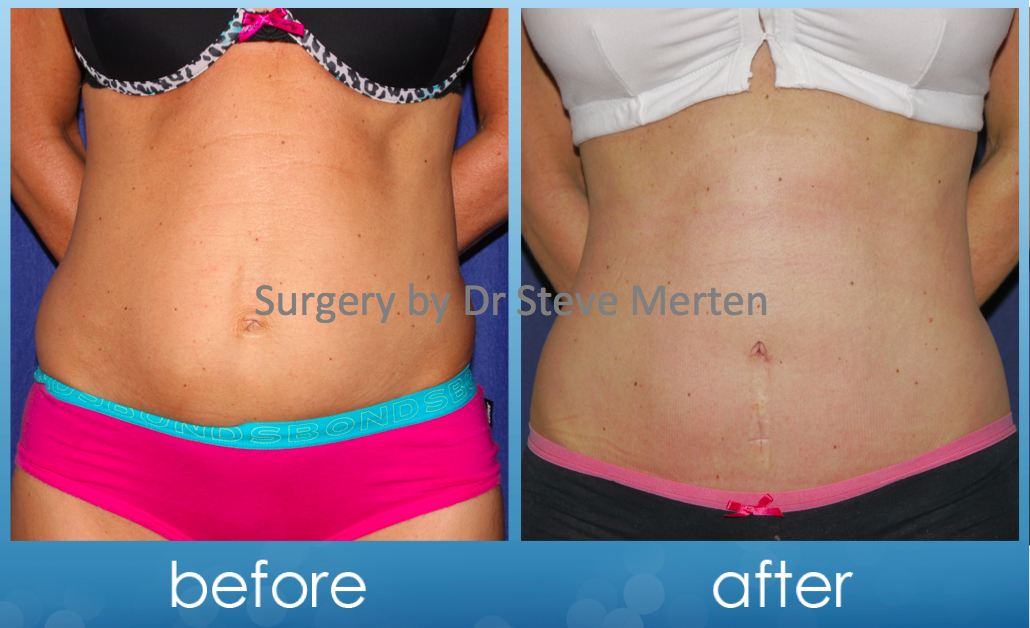
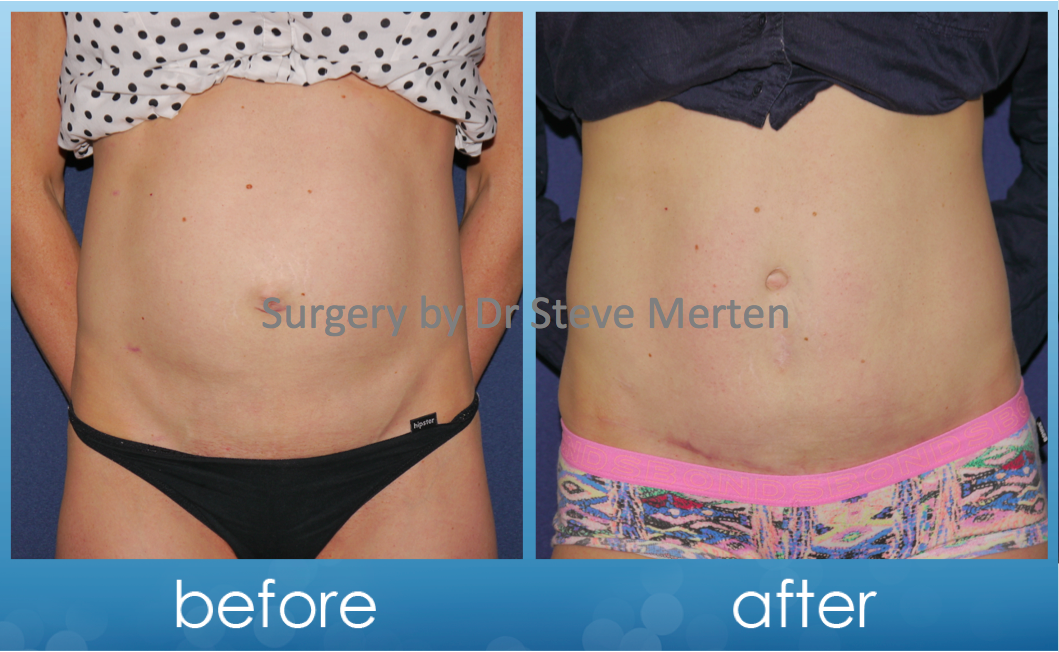
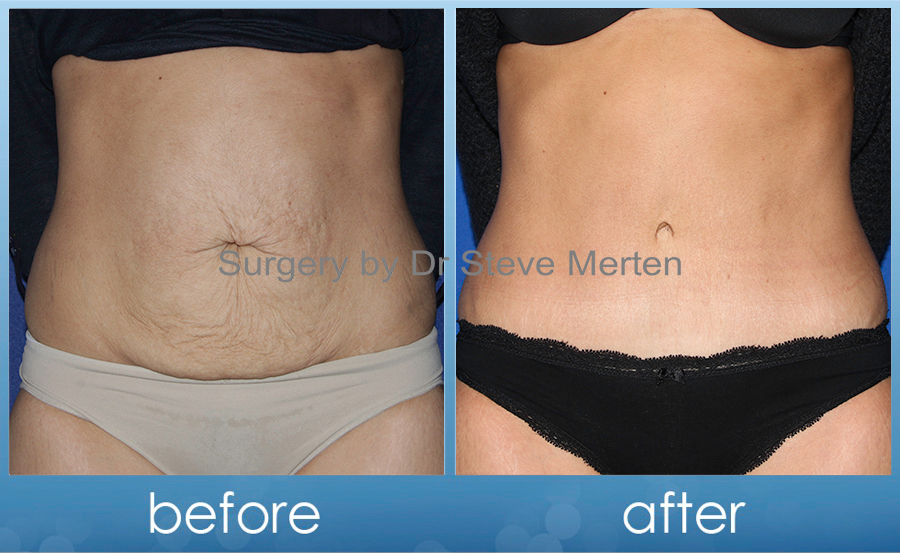
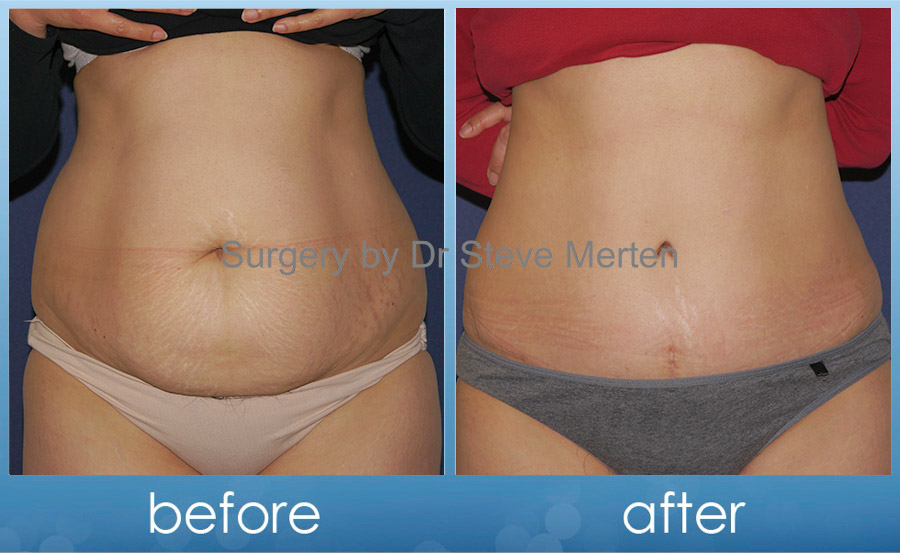
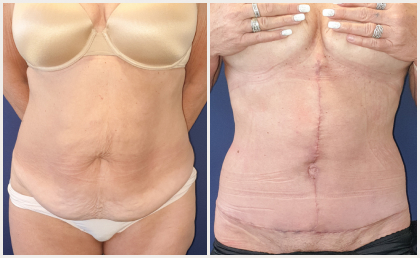
Please note: Outcomes shown are only relevant for the individual patient and do not necessarily reflect the results other patients may experience. Results vary due to many factors including an individual’s genetics, diet and exercise.
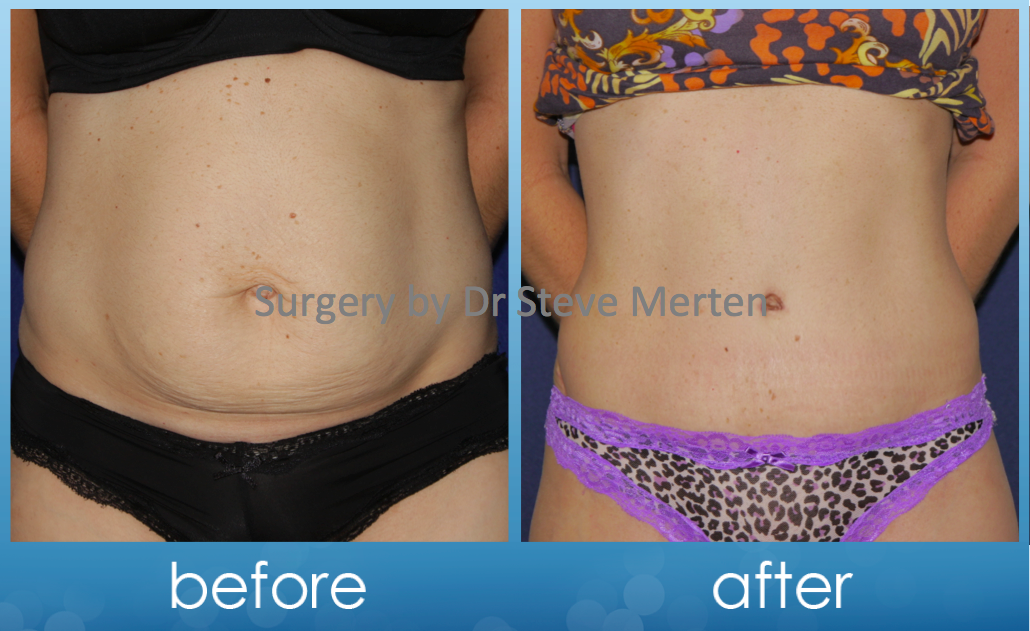
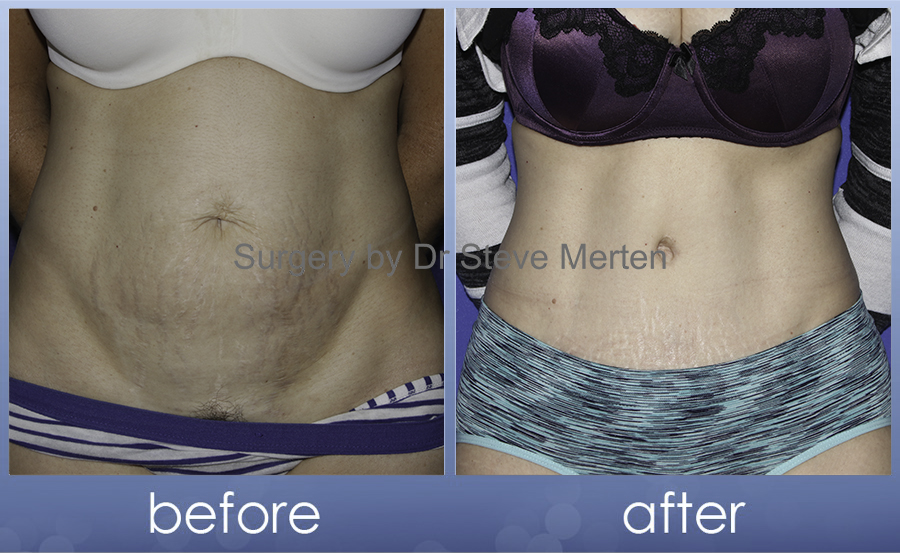
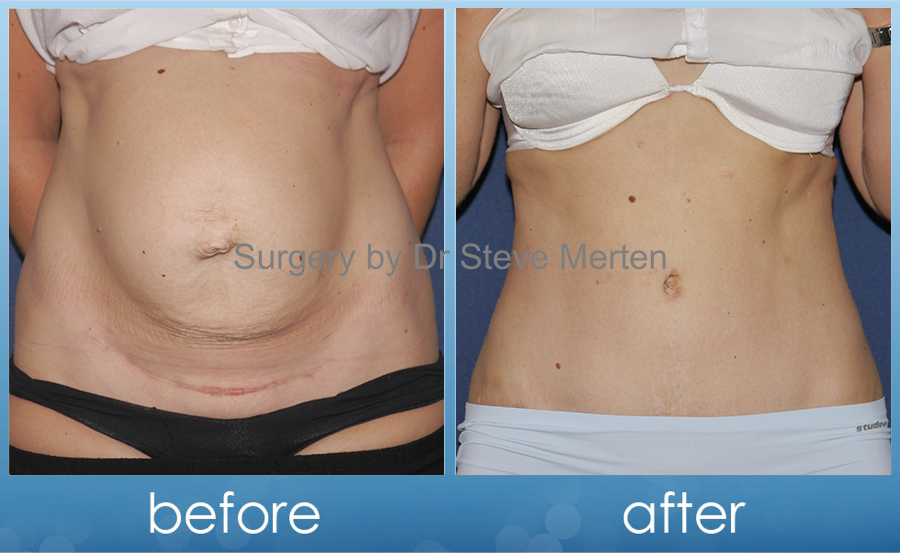


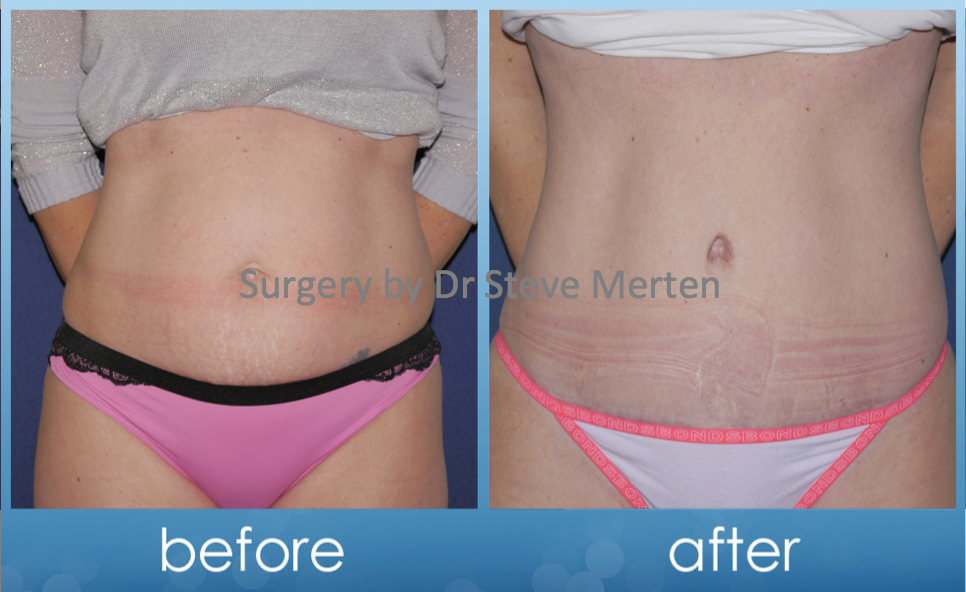
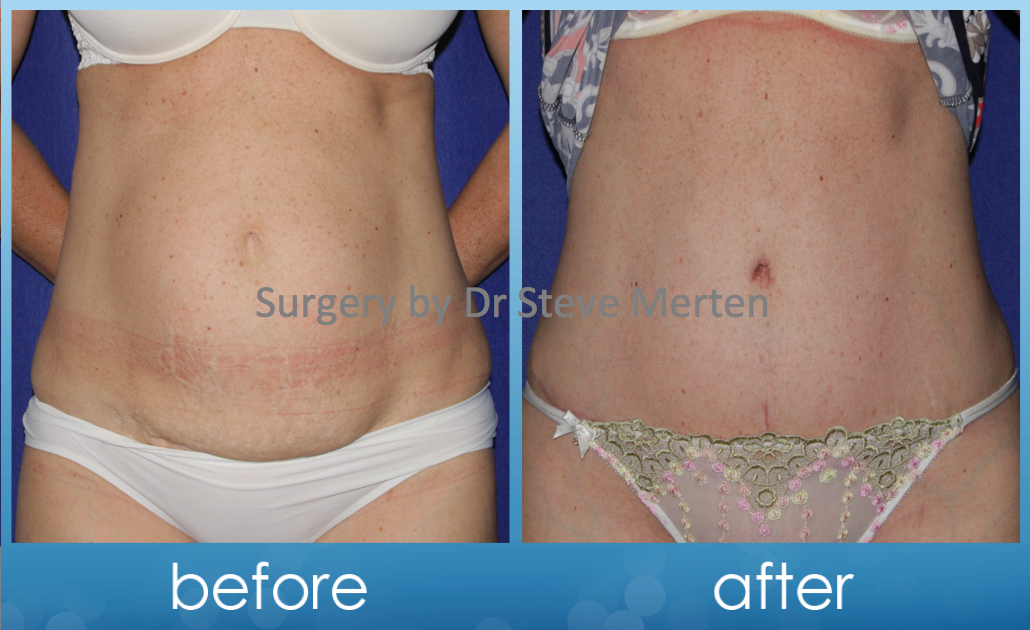
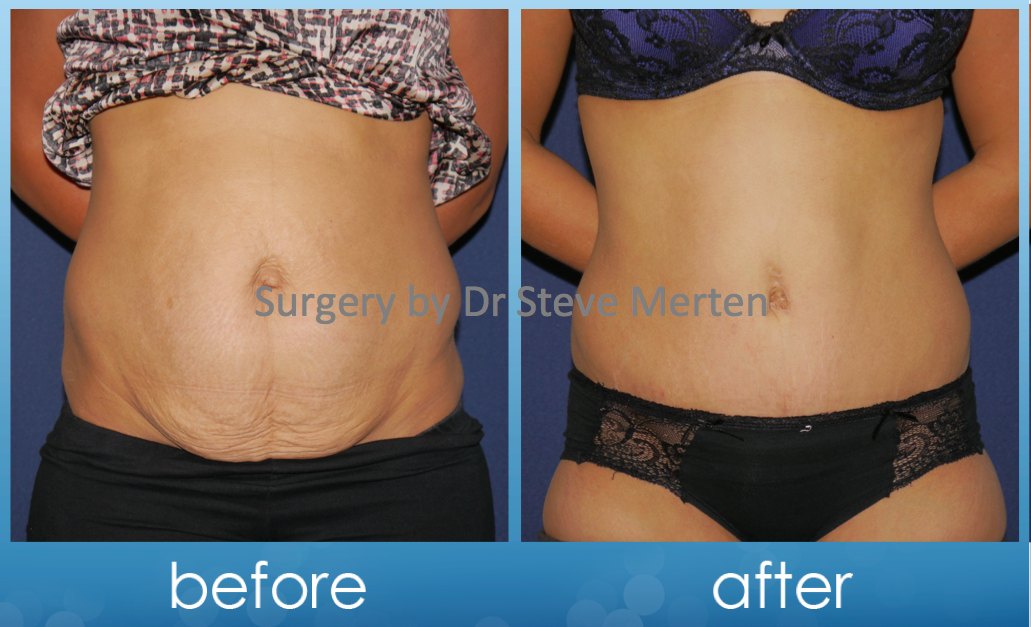
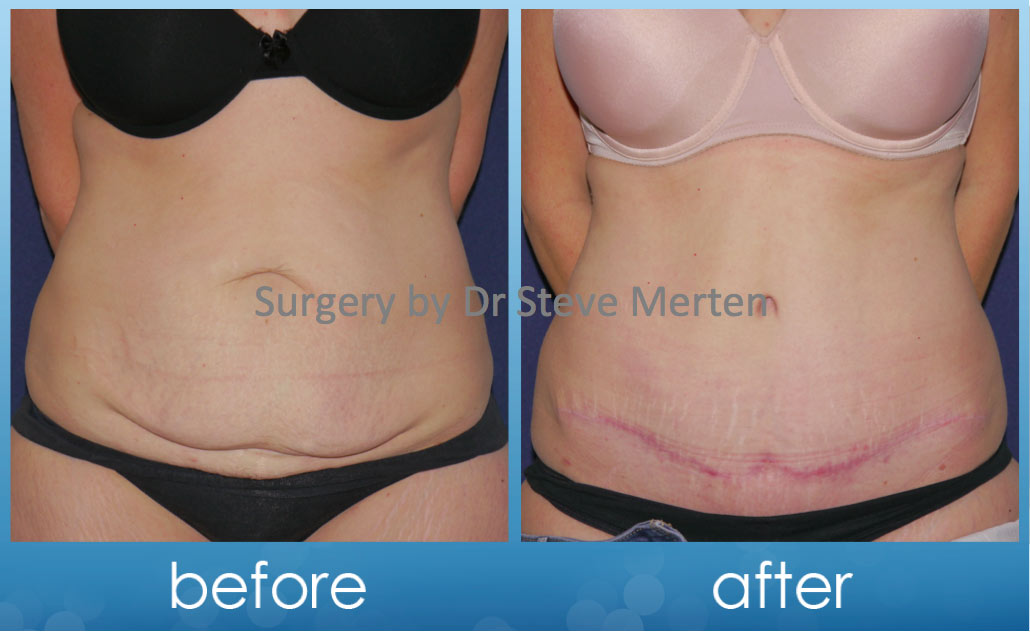
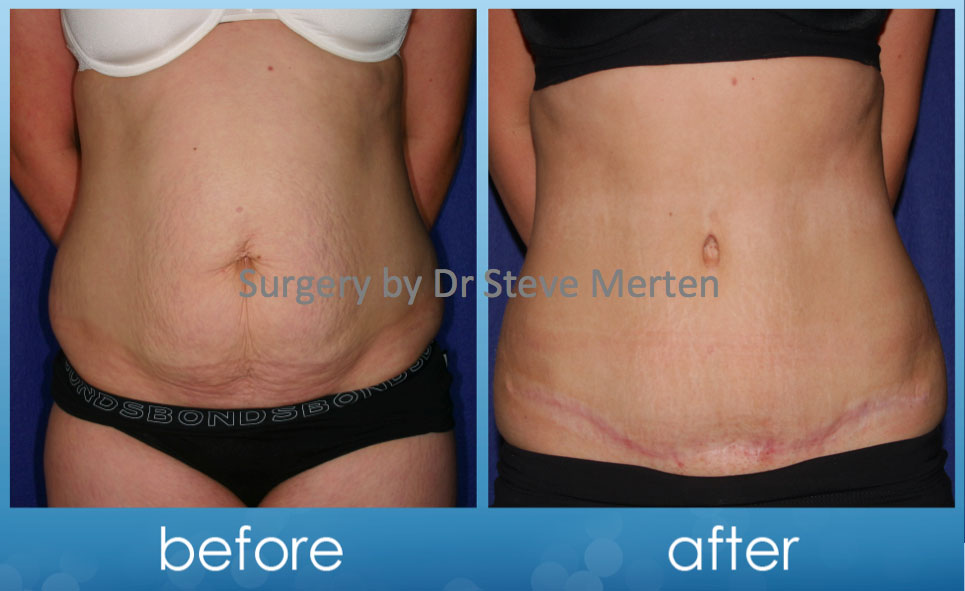
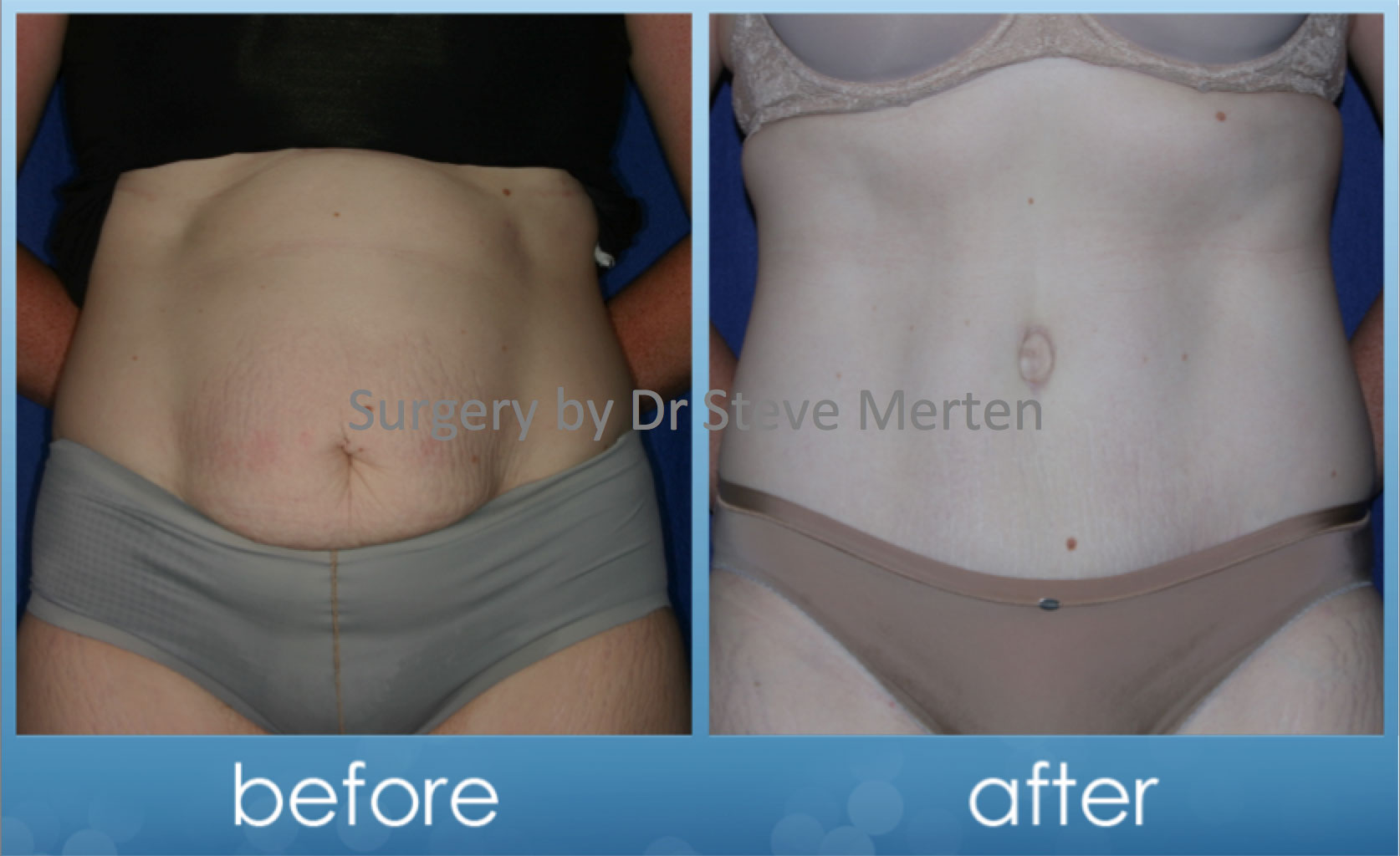
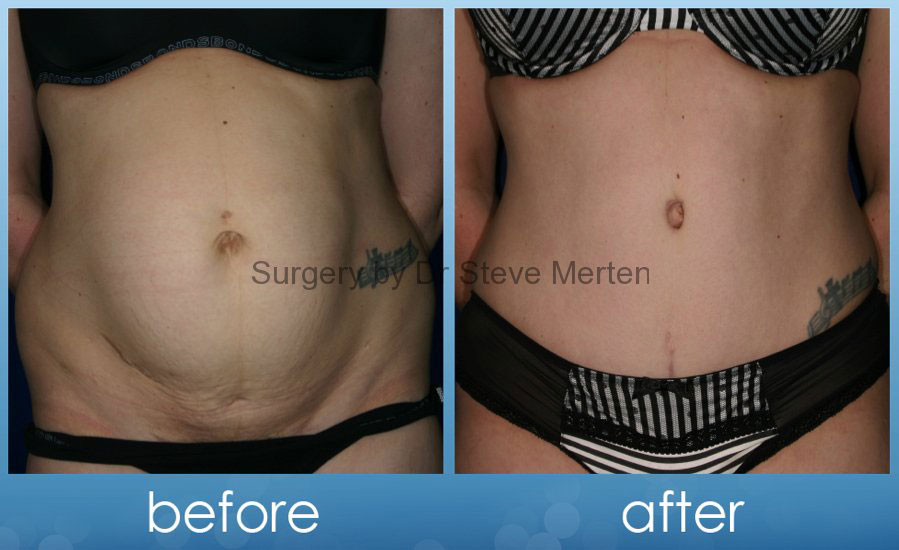
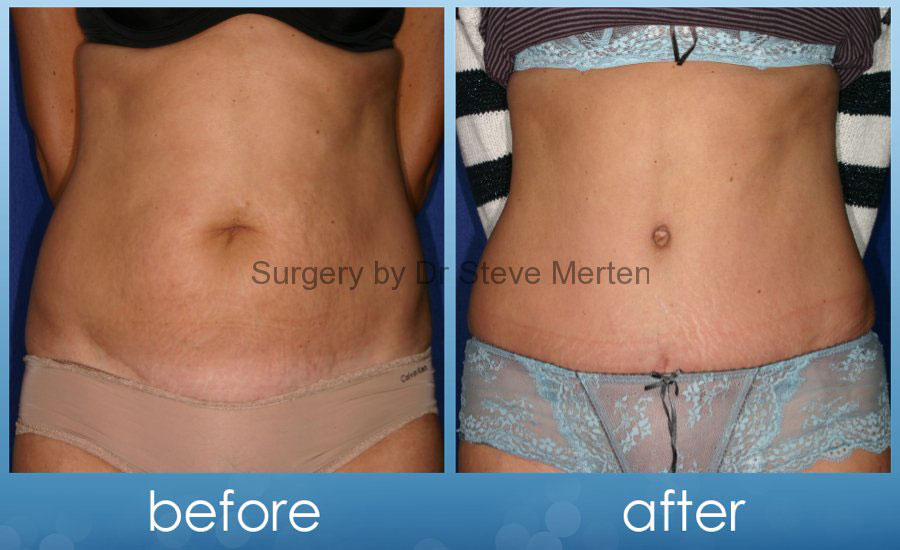
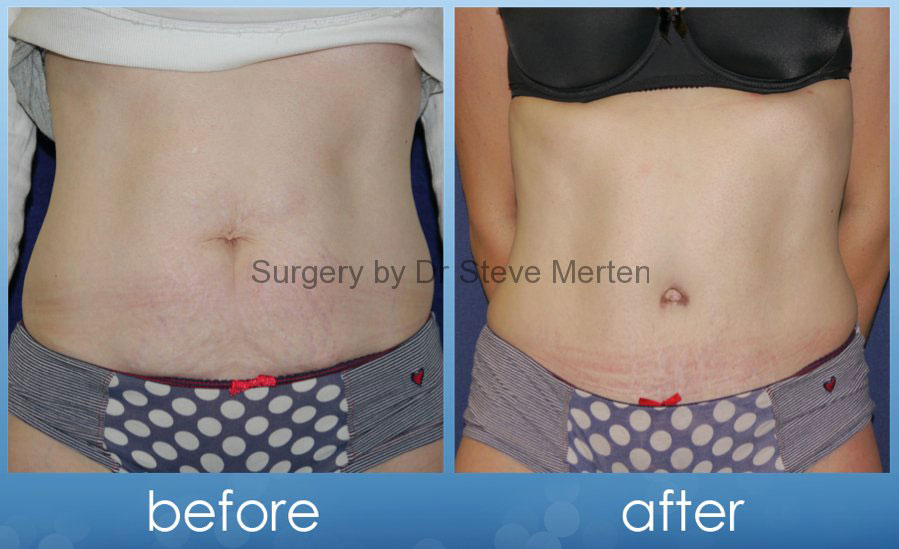
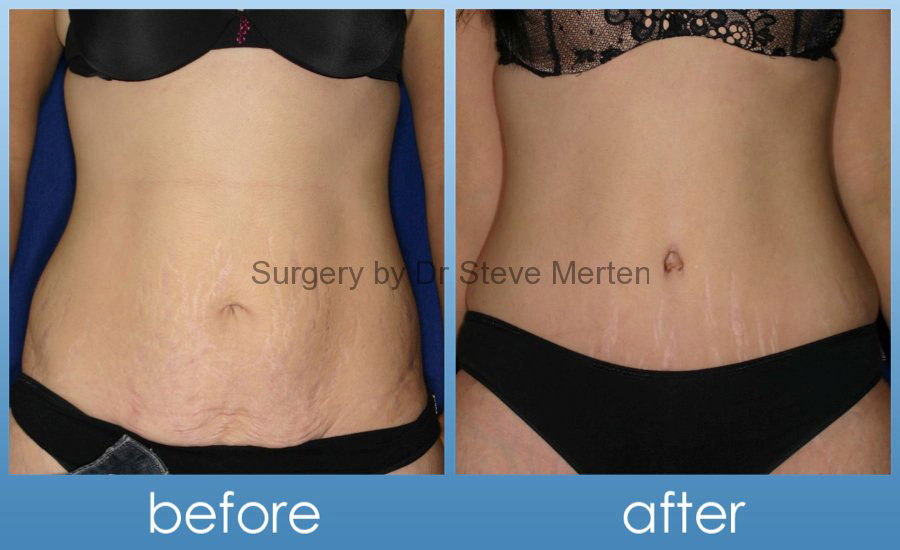
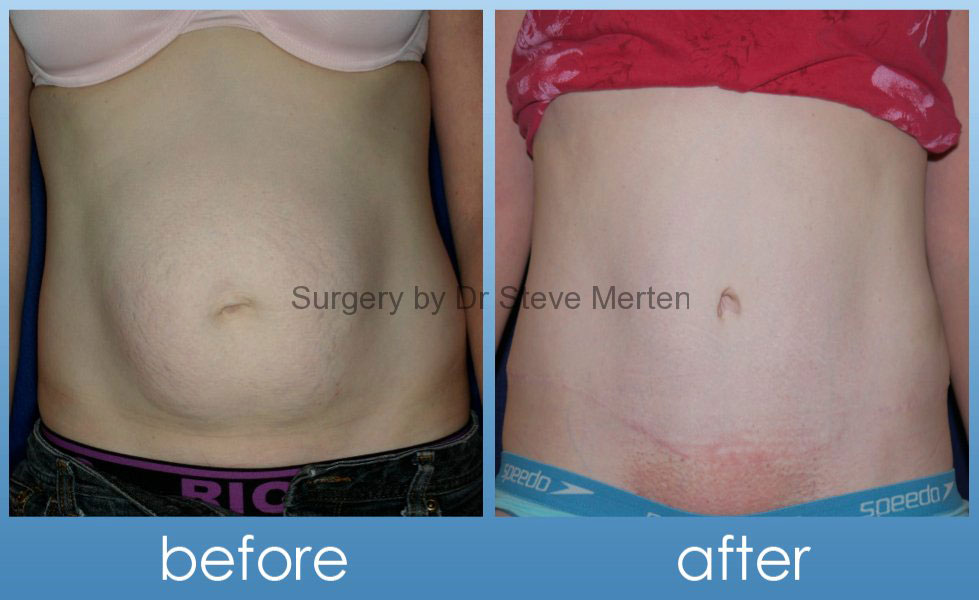
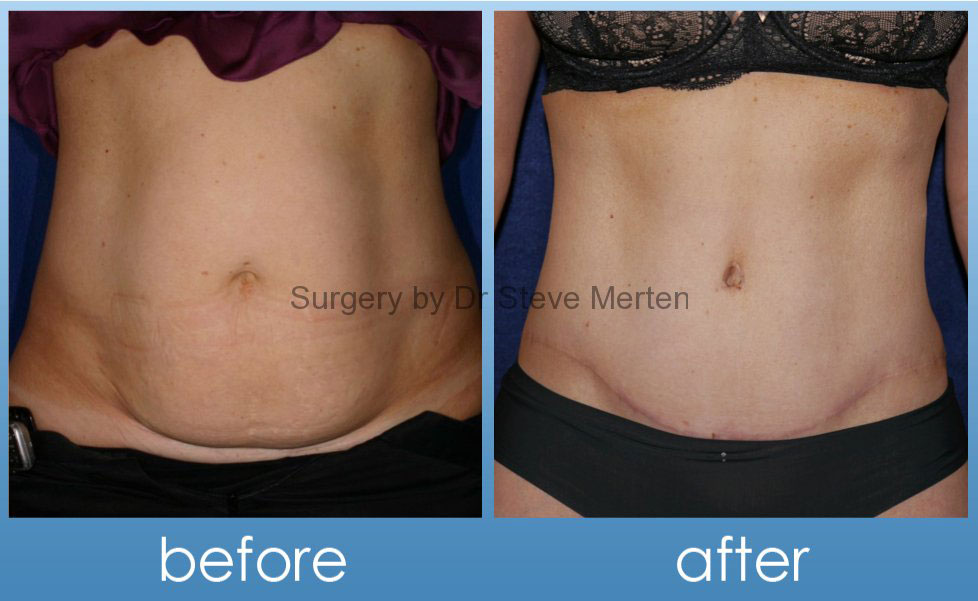

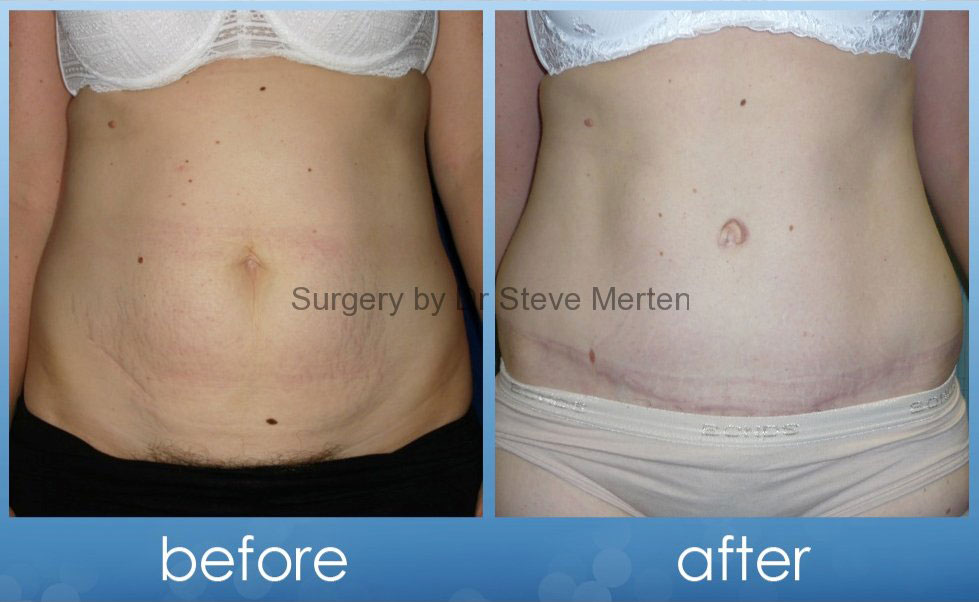

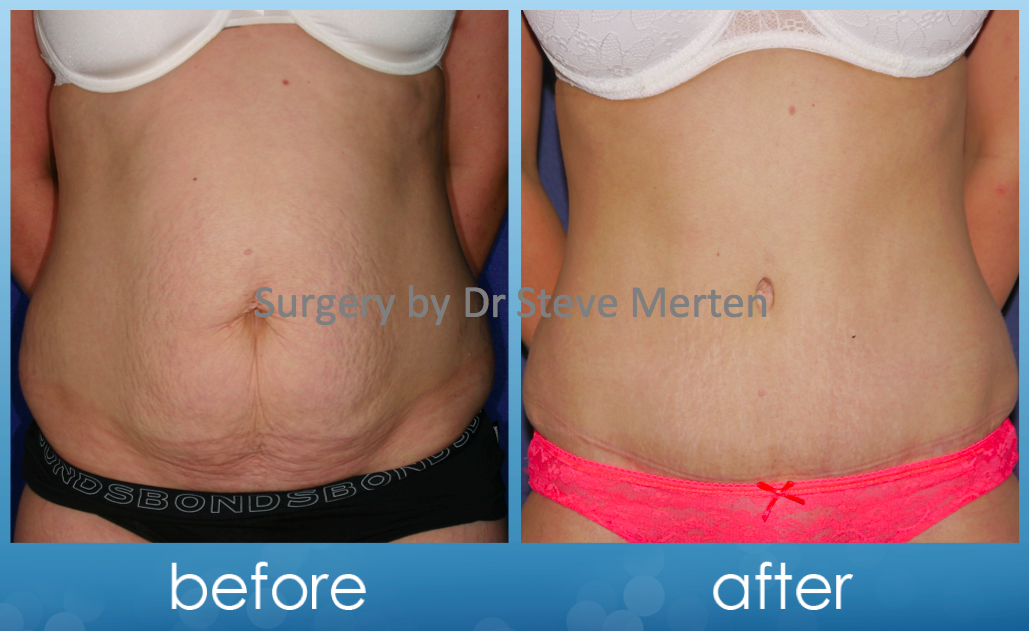
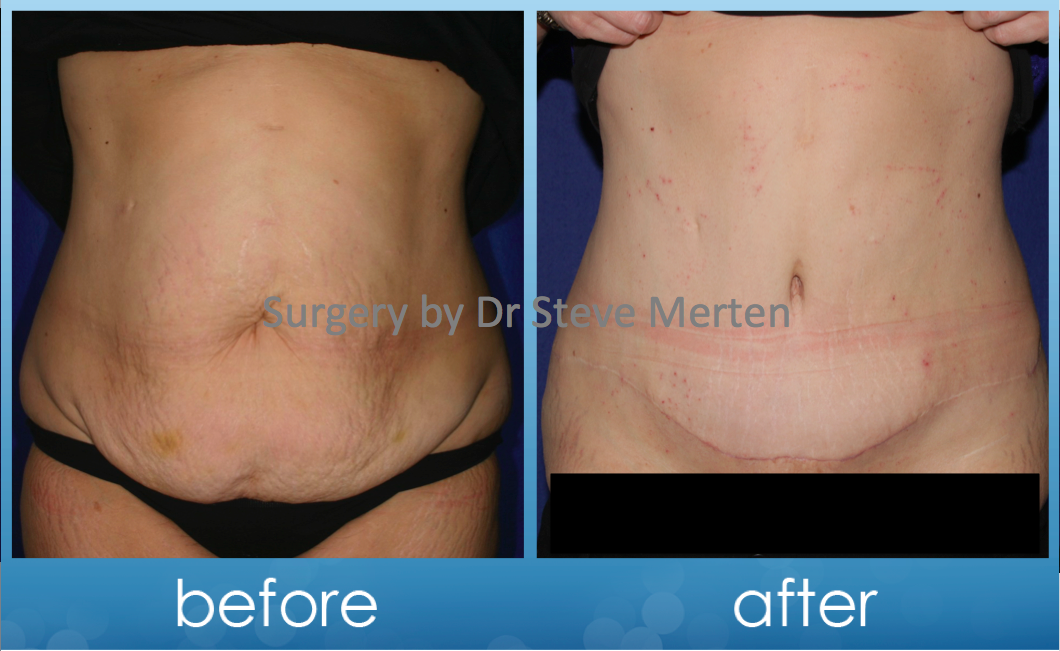
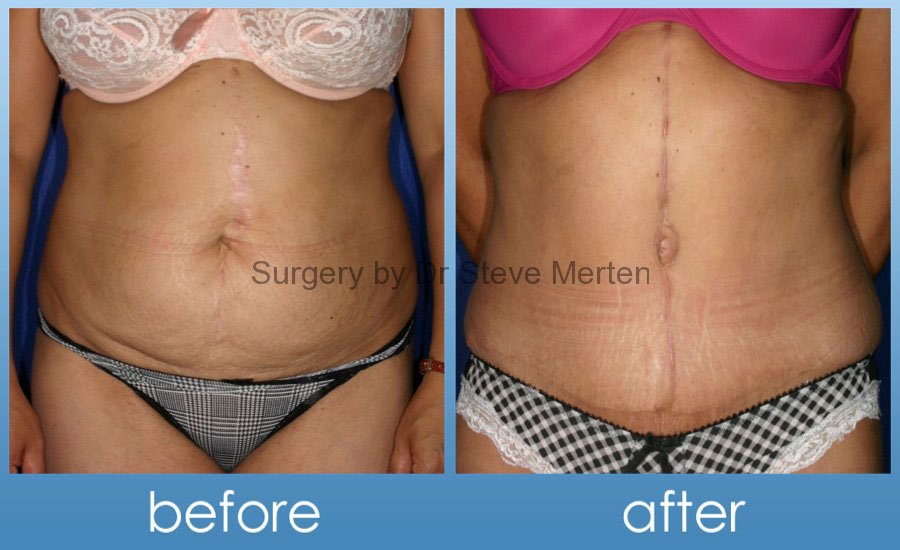
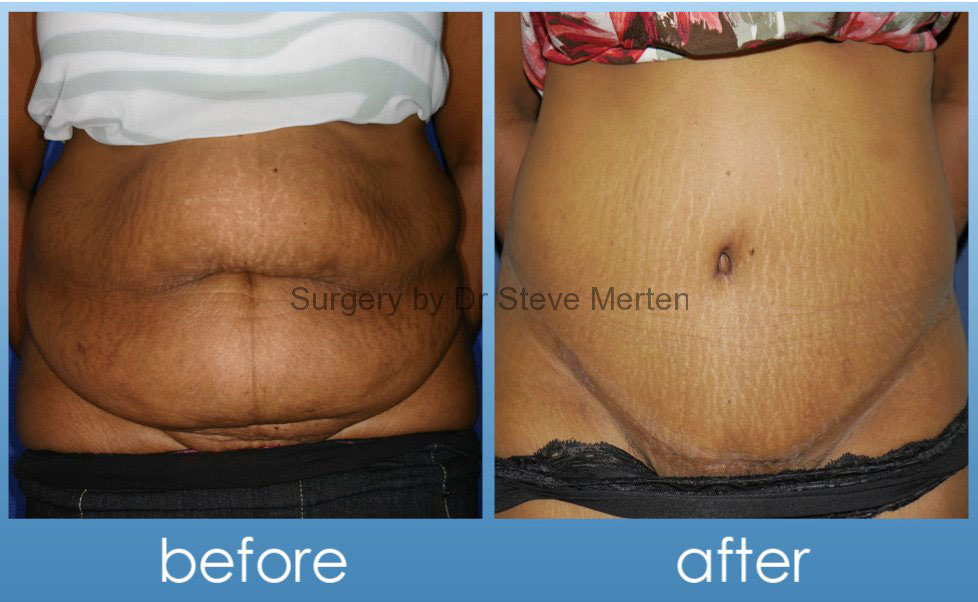
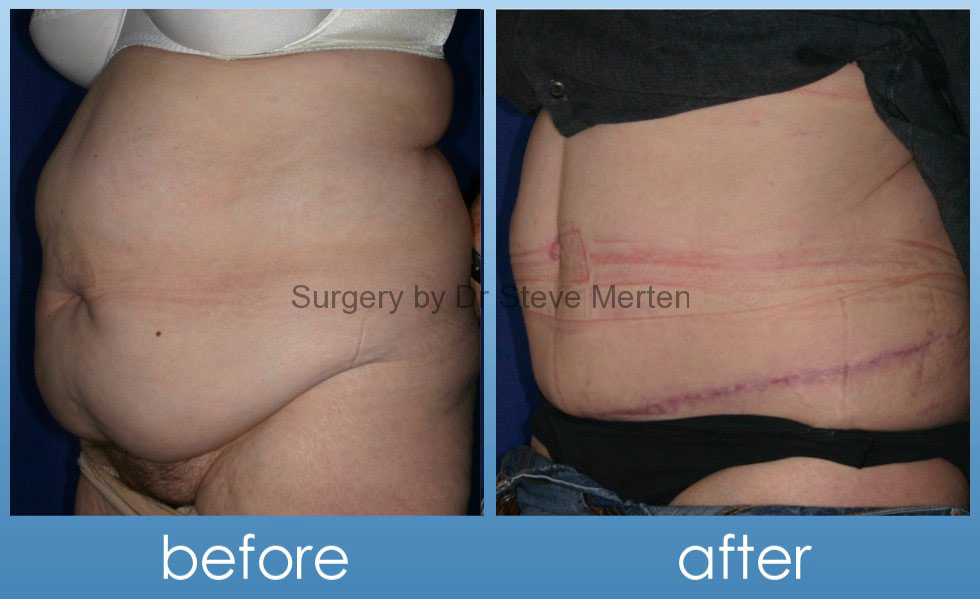
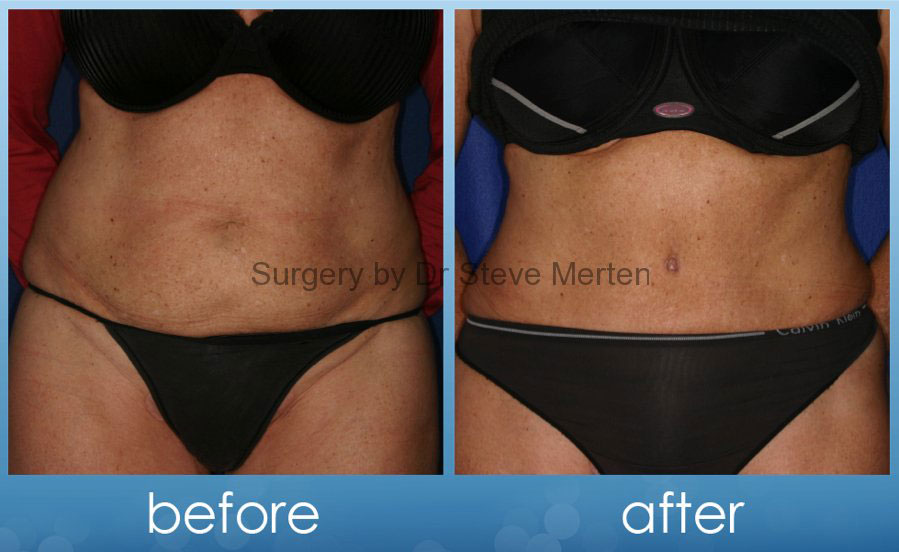
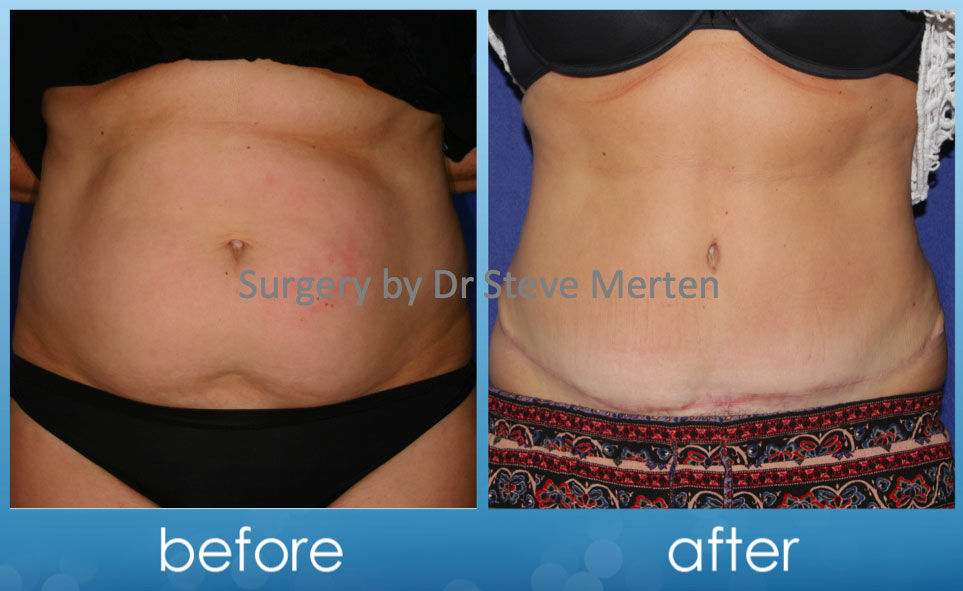

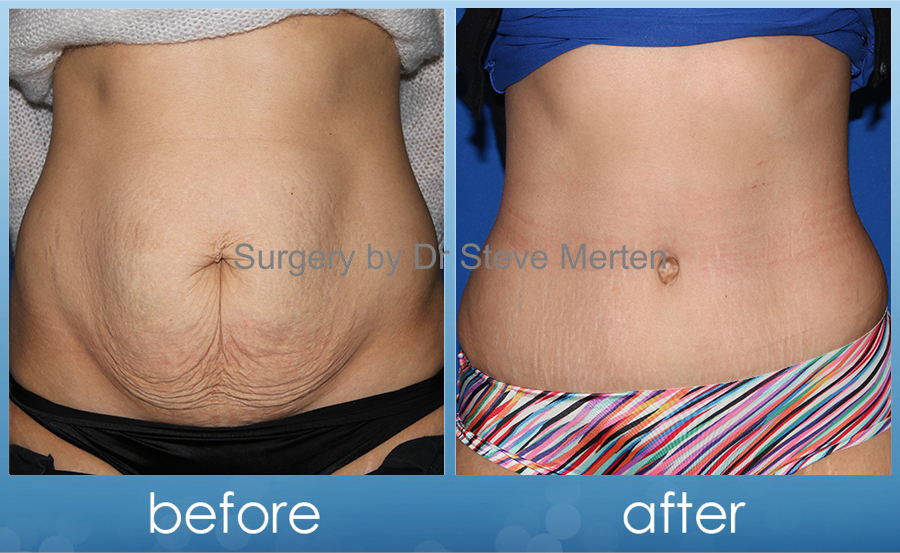

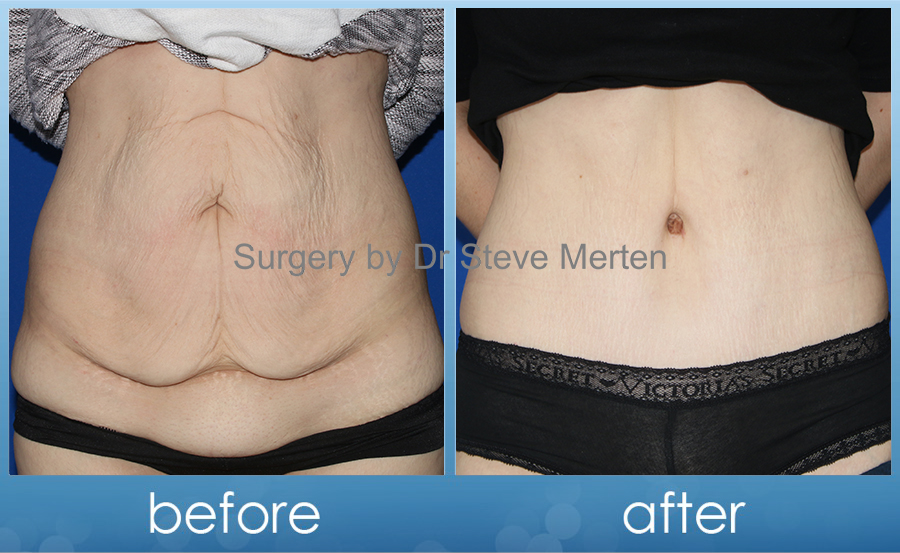
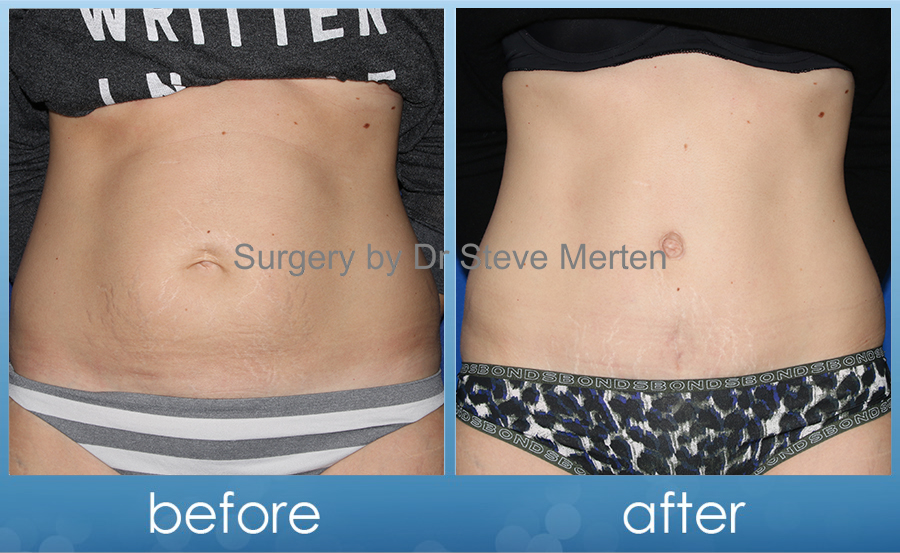
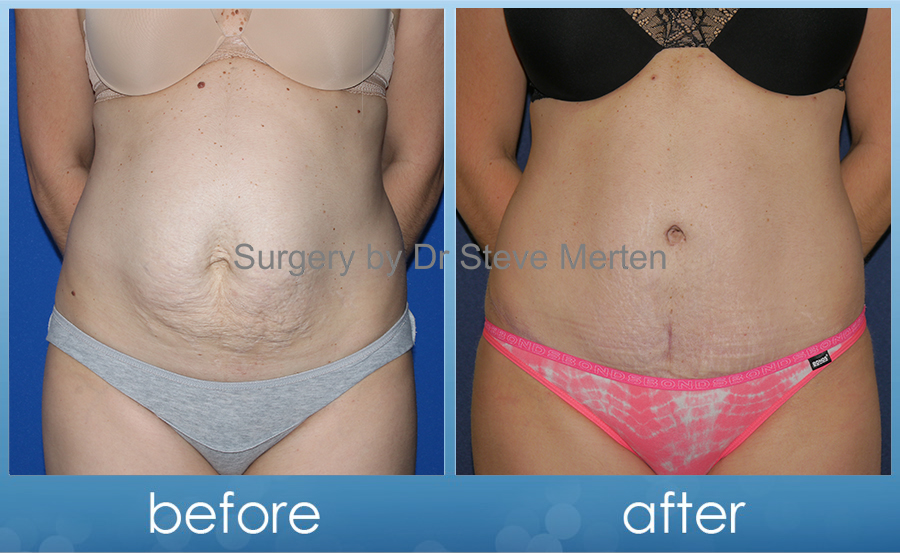
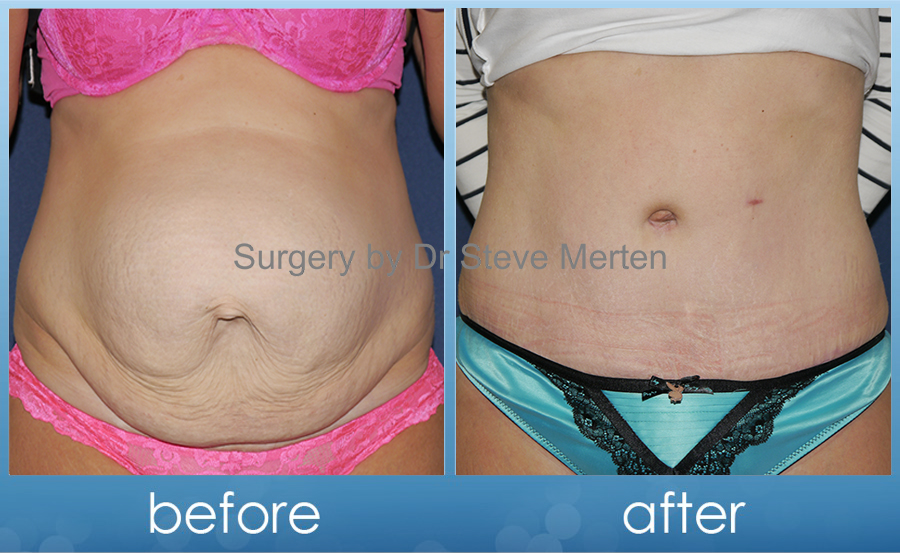
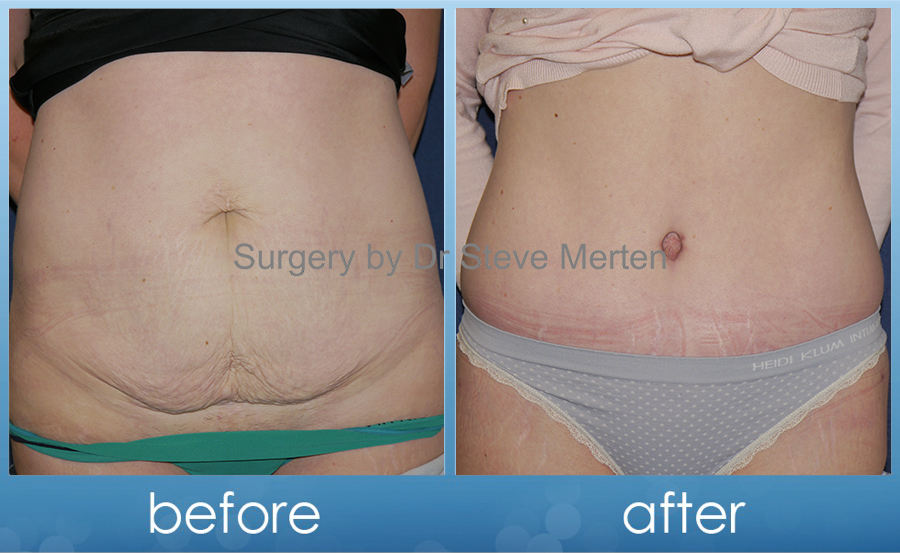


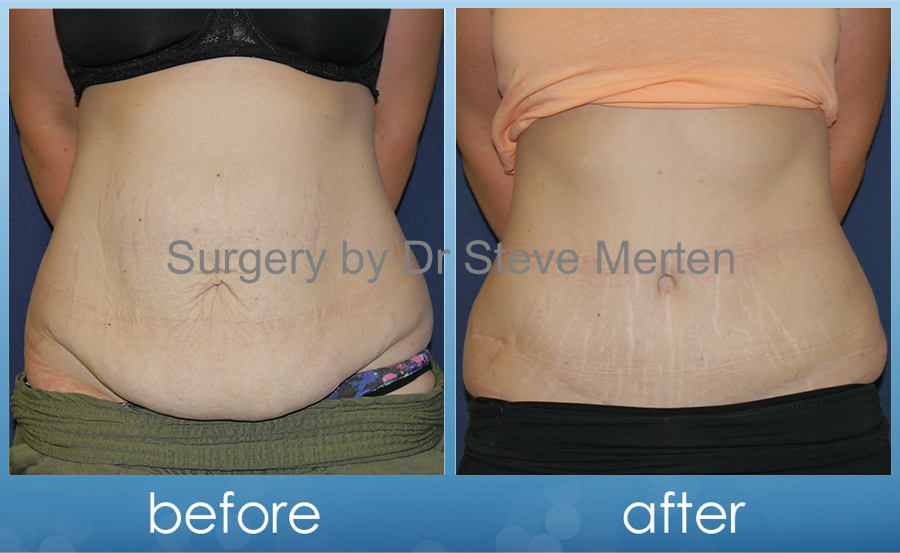
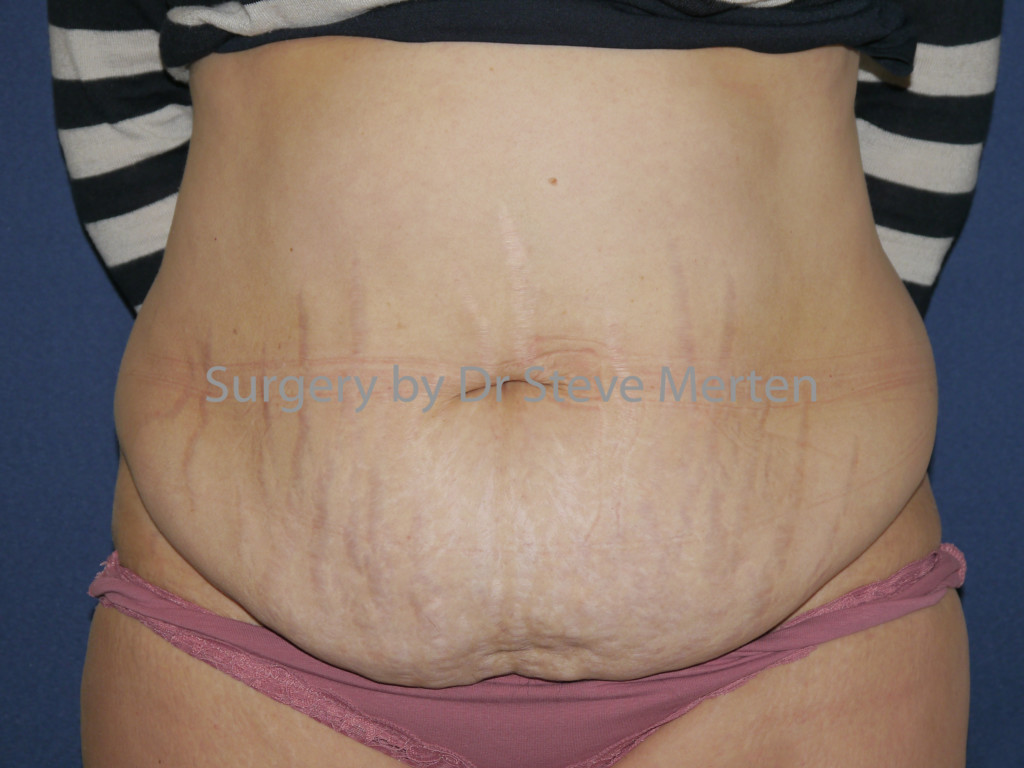
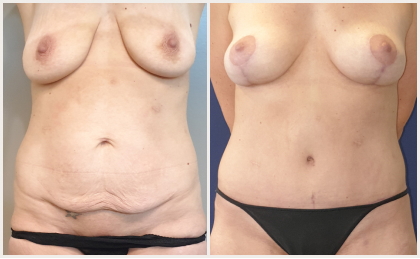
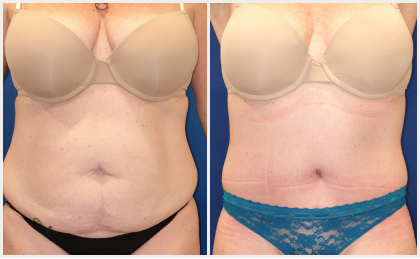
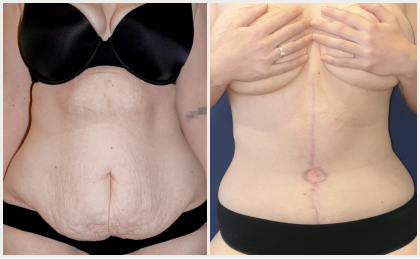


Every patient’s quote is individual, but out-of-pocket costs for abdominoplasty at Pure Aesthetics currently start from $16,775.
Abdominoplasty is recognised as a medical procedure and attracts Medicare rebates (and therefore private health insurance contribution) in two circumstances:
Medicare and health insurance do not cover the full cost of this surgery. Additional “gap” payments apply. For an estimate of fees specific to your situation, please contact our team to schedule a consultation.
Complete the form below and our team will contact you to discuss your enquiry and arrange a consultation with one of our Specialist Plastic Surgeons.
All surgery carries risks. Before proceeding, you should seek a second opinion from a Specialist Plastic Surgeon.
Liposuction is the main alternative for patients who only want to treat a small area of fat around the abdomen, though it does not tighten loose skin or repair abdominal muscles the way abdominoplasty does. Our surgeons routinely use power-assisted liposuction, which results in smoother, more predictable results with a better recovery period involving less pain, swelling and bruising.
Abdominoplasty is not intended to correct major weight-related issues, and this surgery will not be performed on current smokers or those with extreme obesity.
Looking at before and after abdominoplasty photos is a good way to understand what is reasonable to expect from the surgery. Other things you may need to consider:
Before your consultation, you may find it helpful to read why choosing a plastic surgeon matters and Pure Aesthetics’ cosmetic surgery checklist.
Please feel free to contact us with any additional questions. The Pure Aesthetics team will be happy to address any concerns you may have.
A full abdominoplasty tightens the abdominal muscles along their full length and repositions the belly button, giving the most comprehensive contour improvement. A mini-abdominoplasty addresses a smaller area below the belly button, involves less muscle tightening, and does not move the belly button, so recovery is usually quicker.
In a full abdominoplasty, the belly button is freed from the surrounding skin, then repositioned through a new opening at the end of the procedure. In a mini-abdominoplasty, the belly button is not moved at all.
No. Our plastic surgeons do not routinely use drains for abdominoplasty, including mini-abdominoplasty, to support your comfort and recovery.
A mini-abdominoplasty takes about 2 to 3 hours and may be day-only surgery. A full abdominoplasty takes 3 to 4 hours and typically involves a hospital stay of several days.
Moderate discomfort is usual in the first days, managed with pain medication. Most patients need 2 to 3 weeks off work, with full recovery taking up to 6 weeks and an abdominal support garment worn for the first 4 weeks.
As with any surgery, risks include infection, bleeding, seroma, scarring and anaesthetic complications, among others. Scars are permanent but generally fade to a fine, pale line over about a year.
Out-of-pocket costs at Pure Aesthetics currently start from $16,775, but your own quote depends on factors including which technique is needed and whether any procedures are combined. An exact estimate is provided at consultation.
Medicare may contribute after pregnancy (item 30175, for muscle separation of at least 3 cm unresponsive to physiotherapy) or after significant weight loss (item 30177). Medicare and private health insurance do not cover the full cost; gap payments apply.
It should not affect your ability to have children in future, but it is typically advised to wait until you have completed your family, as a subsequent pregnancy can reverse the contouring effects of the procedure.
Yes, most often with liposuction or breast surgery, as part of what Pure Aesthetics describes as a post-pregnancy reconstruction. Combining procedures in one surgery can mean fewer separate recovery periods than staging them separately.
For questions outside the scope of this procedure, see Pure Aesthetics’ full FAQ hub.


